
(RNS) — Women have long been the backbone of religion in America.
They are more likely than men to identify as religious, say faith is important in their lives, attend services and pray. That’s especially true among older women, according to data from the Pew Research Center.
But times are changing. And more young women seem to be giving up on God — or at least organized religion.
A new report released Wednesday (April 15) from Washington, D.C.-based Public Religion Research Institute found that 43% of adult women under 30 identify as “none” — those who claim no religious identity. That’s up from 29% in 2013.
PRRI found that unaffiliated young women outnumber unaffiliated men (35%). Overall, PRRI found that 39% of Americans under 30 identify as “none.”

The findings conflict with claims of a religious boom among young Americans.
“Looking at young adults, there is a shift happening, but it’s not among Gen Z men, as some suggest. Instead, young women’s declining religiosity has brought them on par with their male counterparts,” said Melissa Deckman, CEO of PRRI.

Other studies have found that the religion gender gap has shrunk among young people. Pew found that only 57% of young women and 58% of young men claim a religious identity — a virtual tie.
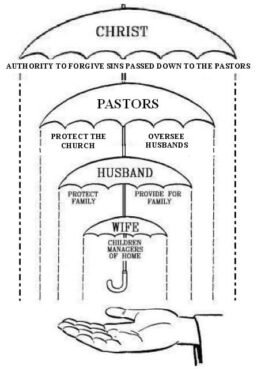
Deckman said the data reflects political and social realities. Young women, she said, aren’t interested in the kind of traditional gender roles that conservative religious groups are promoting.
“I think you’re running into this head-on collision, where a lot of younger women are just shedding religious labels because they don’t endorse the views of a lot of conservative and outspoken churches,” said Deckman.
Charissa Mikoski, an assistant professor at Hartford Institute for Religion Research, said that overall, women still make up about 60% of active congregation members. Mikoski is part of a team that studies trends in congregational life, rather than the general population. While young women — both millennials and Generation Z — attend services slightly less than men, they are still more likely than men to be part of a congregation.
“In all of our data, women are still much more likely to be participating in congregations,” she said.
Young people only make up about 14% of church members, despite being about a quarter of the U.S. population. But she noted that the percentage of young people who say they are attending more regularly outnumbers the percentage who say they are attending less often.
And there’s no sign that religion in America will disappear anytime soon.

PRRI’s report, along with reports from Pew and other researchers, found that the rise of the unaffiliated — which has dominated religion headlines in recent decades — has plateaued. The percentage of Americans who claim no religion rose from 16% in 2007 to 31% in 2022, according to Pew, before settling at about 28%.
Although the share of the population that is unaffiliated will likely rise as older religious Americans die and are replaced by younger, less devout Americans, most surveys show that more than half of young Americans are religious.
Deckman said religious groups will persist but be smaller.
“I think the great irony is that we have a nation of people that are lonely — they’re looking for connection,” said Deckman. “And in some ways, you would think that religious bodies would be the ideal place to have that.”
PRRI’s report also showed stark differences in the religious makeup of the country’s two major political parties. Republicans remain overwhelmingly Christian — 84% of Republicans identified as Christians, including 68% who were white Christians. Only 13% were “none.” That’s similar to 2013, when 86% of Republicans were Christian, including 75% who were white Christians.
By contrast, the unaffiliated (34%) now outnumber white Christians (24%) among Democrats. Just over half (58%) of Democrats identify as Christian, while 8% identify with other faiths.
The report also showed that half of LGBTQ Americans identify as “none” — twice the percentage as straight Americans (25%).

Along with claims about young men flocking back to church, there’s been a rise of Christian pastors and leaders, known as “Theobros,” who are vocal online and promote very traditional general roles. Some even advocate repealing the 19th Amendment, which gave women the right to vote.
That appeals to some social media influencers, who embrace the title of “tradwife,” and some young men. But it’s unlikely to draw many people to church.
“As a growth strategy, you know, it seems to be a little dicey,” said Deckman.