- June 27, 2026

When AI Feels Human: Ways To Teach Students About Anthropomorphism
When AI Feels Human: 5 Ways To Teach Students About Anthropomorphism Contributed by Dr. Athena Stanley, Educator Artificial intelligence (AI) systems are becoming increasingly prevalent
Designing for Depth: When High Achievement Isn’t the Whole Story
Designing for Depth: When High Achievement Isn’t the Whole Story contributed by Laura Mukerji, InterestEd Educational Solutions In most classrooms, we rely on visible indicators
What Is A One-to-One Classroom?
One-To-One Classroom Related Terms: 1:1 Technology · One-To-One Computing · Blended Learning · Personalized Learning · Digital Learning · One-On-One Instruction Overview: A one-to-one classroom
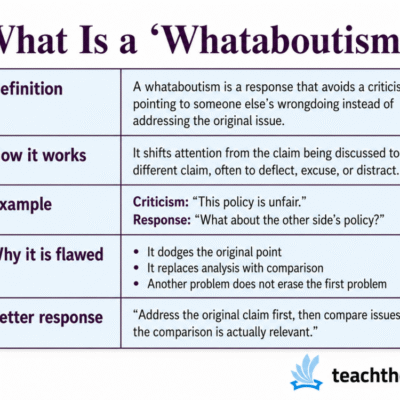
What Is A Whataboutism? | TeachThought
What Is Whataboutism? Whataboutism is a rhetorical move in which a person avoids responding to a criticism, claim, or question by pointing to a different
An Updated Guide To Questioning In The Classroom
by Terry Heick If the ultimate goal of education is for students to be able to answer questions effectively, then focusing on content and response
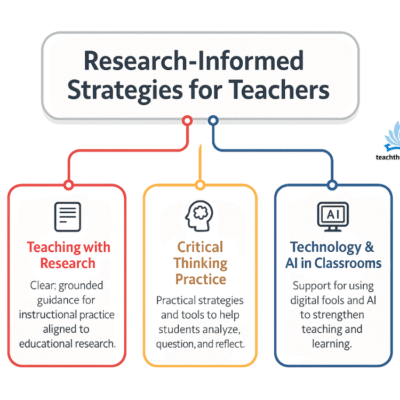
10 Ways Teachers Can Use AI To Save Time
Every modern teacher recognizes a familiar tension. Artificial intelligence is completely reshaping the web, but classrooms still run on genuine human relationships. You might wonder
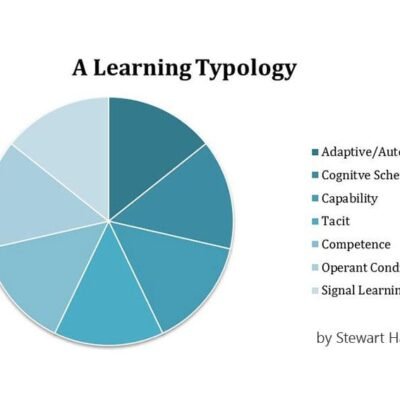
A Learning Typology: 7 Ways We Come To Understand
contributed by Stewart Hase, Heutagogy of Community Practice This typology is an attempt to redefine how we think of learning in modern classroom context. Current definitions of
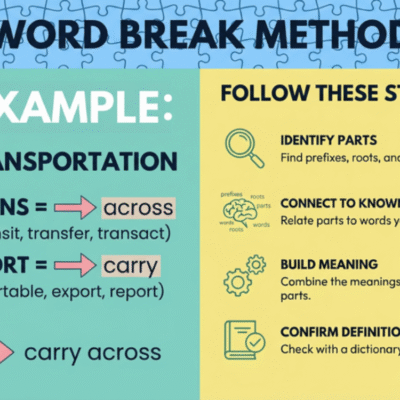
How Breaking Words Changed the Way My Students Approach Language
contributed by Alan Davson ‘Anyone who has visited my classroom knows how much I love words. I teach multimedia arts, but I talk about words
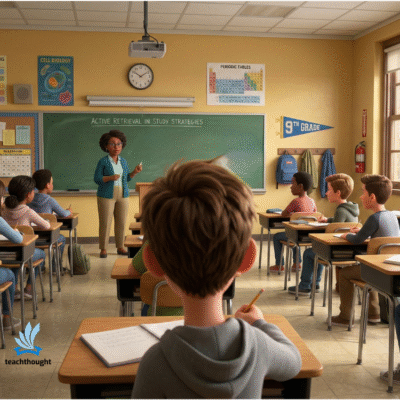
Recognizing Early Expression in Multilingual Young Children
contributed by Iryna Liusik, Early Childhood Educator — Linguistics & Emotional Development Series note: This is Part 1 of a two-part series: Part 2 offers
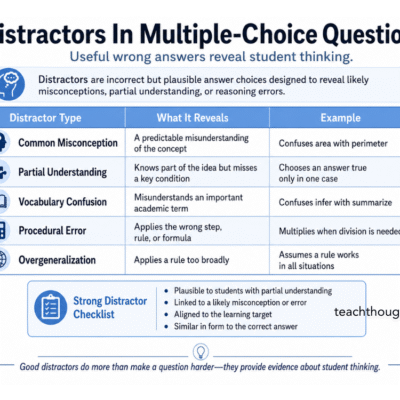
What Are Distractors In Multiple-Choice Questions?
Assessment Design Distractors are the incorrect answer choices in a multiple-choice question. When they are well-designed, they do more than make a question harder: they