

It was a sushi night at home, and I didn’t expect it to end in learning how to get soy sauce out of clothes.
I had set up the whole spread (the rice, the rolls, the pickled ginger, a small bowl of soy sauce for dipping) and I was feeling very pleased about it. Then I reached across the table and knocked the bowl.
Not a splash. A full tip. Dark soy sauce across the front of a light gray linen shirt.
My instinct was to grab the hydrogen peroxide from under the sink. I had used it on wine stains before and it worked. What I didn’t know in that moment was that hydrogen peroxide is one of the worst things you can apply to a soy sauce stain. It doesn’t remove the dark pigment. It oxidizes it into something darker that bonds more tightly to the fabric.
This is the post I wish I had read before I made that mistake.
Quick Answer: How to Get Soy Sauce Out of Clothes
Blot immediately with a dry white cloth. Don’t rub. Flush with cold water from the back of the fabric. Apply liquid dish soap directly to the stain, work it in gently, and let it sit for 10 to 15 minutes. Follow with an enzyme stain remover for another 20 to 30 minutes. Launder in cold water with a heavy-duty detergent. Check before the dryer.
💡 Never use hot water, hydrogen peroxide, or vinegar on a fresh soy sauce stain. All three make it worse. This post explains exactly why.
Why Soy Sauce Stains Are More Complicated Than They Look
Soy sauce looks like a simple dark liquid stain. It isn’t. It’s a three-component stain system where each component needs different chemistry to remove, and using the wrong treatment on any one of them can permanently set the other two.
Component one: melanoidins. The dark brown color in soy sauce comes from melanoidins, which are complex brown polymers created during the fermentation process through a reaction called the Maillard reaction between sugars and amino acids. According to Harvard University’s School of Public Health, melanoidins are what give fermented soy sauce its characteristic deep color and also what make it bind so stubbornly to fabric fibers. These polymers have a natural affinity for cellulose, which is the primary component of cotton. The longer they sit in contact with fabric, the more deeply they penetrate.
Component two: soy proteins. Soy sauce contains hydrolyzed soy proteins from the fermentation process. These proteins behave like other protein stains on fabric. They denature and bond irreversibly to fiber when exposed to heat. Above roughly 35 degrees Celsius, the proteins begin to set. Hot water during treatment is not just unhelpful. It actively locks the stain in permanently.
Component three: fermented tannins. The fermentation of wheat and soybeans produces hydrolyzed tannins that behave similarly to the tannins in red wine, coffee, and tea. These tannins can interact with fabric dyes, particularly in dark-colored clothing, and cause a phenomenon known as dye stripping where the tannins chelate metal-based dye mordants and release them, creating a faded or discolored patch. This is why dark fabrics sometimes show a reddish-brown shadow after a soy sauce stain even when the soy sauce itself has been removed.
The Three Things You Should Never Use on Soy Sauce
This section matters more than any method in this post. All three of these are common stain removal instincts that make soy sauce stains significantly worse.
Never use hydrogen peroxide on soy sauce. This is the most important warning. Hydrogen peroxide is the right call for wine, blood, and sweat stains. On soy sauce, it oxidizes the melanoidin pigments in ways that can create darker chromophore compounds that bond more tightly to the fabric. Multiple fabric care experts and laundry science sources confirm that hydrogen peroxide worsens soy sauce stains rather than improving them. You can end up with a darker, more permanent stain than the one you started with.
Never use vinegar on fresh soy sauce. Vinegar is acidic and can fix the tannin component of soy sauce, making it harder to remove. It also lowers the local pH in a way that accelerates the bonding of melanoidins to cotton fibers. Vinegar has a role in the soy sauce stain process, but only in the final rinse after the stain is fully removed. Not during treatment. This distinction is critical and almost every other guide gets it wrong.
Never use hot water. The soy protein component denatures above approximately 35 degrees Celsius, bonding it permanently to the fabric. Use cold water throughout every stage of treatment, from the initial flush to the final wash. The only exception is if you’re using an enzyme stain remover that specifically requires warm water to activate. In that case check the product label and use the minimum temperature recommended.
Pro Tip: Dark Soy Sauce vs. Regular Soy Sauce
Dark soy sauce (used heavily in Chinese braised dishes and as a color agent) contains a higher concentration of melanoidins and often added caramel color, making it more concentrated and harder to remove than regular soy sauce. If you’re cooking with dark soy sauce, you already know how intensely it stains everything it touches. Treat dark soy sauce stains with the same sequence as regular soy sauce but extend all soak times. Give the enzyme treatment 45 minutes instead of 20 to 30, and expect that a second full treatment round will likely be necessary even on fresh stains. Tamari, the wheat-free soy sauce used in Japanese cuisine, has a similar melanoidin concentration to regular soy sauce and responds to the same treatment. Low-sodium soy sauce stains slightly easier because the reduced salt content slows the penetration rate into fabric fibers.
The Dark Fabric Warning: Tannin-Dye Stripping
One phenomenon specific to soy sauce on dark fabrics is worth understanding before you start treatment.
The fermented tannins in soy sauce can react with the metal-based mordants used in reactive dyes, particularly in black and dark navy clothing. This tannin-dye interaction can cause dye molecules to release from the fabric, creating a faded or reddish-brown discoloration that looks different from the original soy sauce stain. Once this dye stripping occurs it’s very difficult to reverse.
💡 To minimize this risk on dark fabrics: treat the stain immediately before the tannins have time to interact with the dye mordants, use cold water throughout, avoid OxiClean entirely, and use the vinegar final rinse described in Method 4 after treatment to stabilize the dye.
If you notice a reddish-brown shadow on a dark garment after soy sauce treatment, take it to a professional dry cleaner and explain exactly what happened. Some dye stripping can be partially corrected by professionals with access to dye-restoration solvents.
Fabric Considerations
Cotton and linen: The most forgiving. Handles the full dish soap, enzyme, and OxiClean sequence on whites. Cold water throughout. For linens, lukewarm rather than very cold water is safer to prevent shrinkage.
Polyester and synthetics: The melanoidin pigments can penetrate synthetic fibers more deeply than cotton because of the hydrophobic character of polyester. Extend enzyme soak time to 45 minutes. Avoid OxiClean on dark synthetics. Cold water throughout.
Silk: Rice water method only for home treatment. Professional cleaning for significant staining.
Wool and cashmere: Cold water, very mild detergent, no rubbing, no enzyme cleaners (they can digest wool protein), no OxiClean. Professional cleaning for significant staining.
Dry-clean only: Blot what you can, don’t add liquid, take it to the cleaner and specify that it’s a soy sauce stain so they can choose appropriate solvents.
My Step-by-Step Protocol
For fresh soy sauce on cotton, linen, and most blended fabrics:
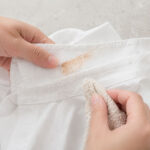
Step 1: Blot immediately with a dry white cloth. Never rub.
Step 2: Cold water flush from the back of the stain for 30 seconds.
Step 3: Dish soap applied directly. Work in gently. Sit 10 to 15 minutes. Rinse cold.
Step 4: Enzyme stain remover applied directly. Sit 20 to 30 minutes. Don’t rinse before laundering.
Step 5: Launder in cold water with heavy-duty detergent.
Step 6: Check before the dryer. Any brown shadow means repeat from Step 3.
Step 7: For residual shadow on whites only, OxiClean soak in cool water 30 to 60 minutes, then launder again.
Step 8: For dark fabrics, vinegar final rinse after the stain is fully gone.
For silk:
Step 1: Blot gently with a dry white cloth.
Step 2: Rice water treatment for 15 to 20 minutes.
Step 3: Blot away and rinse with cool water.
Step 4: Professional cleaning if significant staining remains.
See also
Warning: Never Do These Things
- Never use hydrogen peroxide on soy sauce. It oxidizes the melanoidin pigments into darker compounds that bond more tightly to fabric. This is the opposite of what you want.
- Never apply vinegar to a fresh soy sauce stain. It fixes the tannin component and accelerates melanoidin bonding. Use it only as a final rinse after the stain is completely gone.
- Never use hot water. The soy protein component denatures above 35°C and bonds permanently to fabric.
- Never put it in the dryer until the stain is confirmed gone. Heat permanently sets all three components.
- Don’t use OxiClean before the enzyme step. It cross-links the soy proteins into heat-stable aggregates and makes the stain worse. Enzyme treatment comes first, OxiClean comes last.
- Don’t use OxiClean on dark fabrics. It can strip or lighten dark fabric dye.
What Definitely Does Not Work
Hydrogen peroxide: Covered in detail above. The science is unambiguous. Don’t use it on soy sauce regardless of what other guides say.
Vinegar applied directly to the stain: The tannin-fixing effect is real and documented. Use it only as a final rinse.
Hot water: Sets the protein component permanently. Cold water only throughout.
Stain remover pens: The liquid in the pen dilutes and spreads the stain before it has been blotted properly. Blot the stain dry before any liquid touches it.
Baking soda paste on soy sauce: Baking soda is alkaline. Alkaline agents can accelerate the melanoidin-to-cellulose bonding on cotton and cause issues with silk. It’s useful for many stains and not the right tool here.
The One Thing I Wish I Had Known Sooner
Don’t reach for the hydrogen peroxide. I made this mistake on a shirt I liked and turned a fresh, treatable stain into a darker permanent one in about twenty minutes. The instinct to use the strongest thing available is completely wrong for soy sauce because of the melanoidin chemistry.
The second thing: the enzyme step is not optional. Dish soap alone treats the surface. The enzyme cleaner is what addresses the protein fraction that otherwise remains in the fabric even after the visible stain disappears. Skipping it means the stain often comes back as a faint shadow after washing.
My gray linen shirt is back in rotation. I now keep soy sauce in a small dipping bowl rather than a full-sized dish when I make sushi at home, which has also improved my dipping-to-spilling ratio considerably.
Final Thoughts
Soy sauce stains earn their difficult reputation because most people reach for the wrong thing first. Hydrogen peroxide, vinegar, and hot water all make it worse. Once you understand the three-component chemistry and treat each component in the right order, soy sauce is a very manageable stain even on light fabrics.
Cold water always. Dish soap first. Enzyme cleaner second. OxiClean last if needed on whites. Vinegar only as a post-removal rinse on darks.
And store your soy sauce in a small bowl.
Have you found a method that works well on soy sauce stains? Drop a comment below.
Frequently Asked Questions
Does soy sauce come out of clothes?
Yes, soy sauce stains come out of most fabrics when treated correctly and promptly. The key is using cold water throughout, never hydrogen peroxide, and following a two-step sequence of dish soap for the surface components followed by an enzyme stain remover for the protein fraction. Fresh stains treated within the first few minutes respond well to one round of treatment. Dried stains and stains that have gone through a hot wash need more rounds but are still often recoverable. Stains that have been through a hot dryer are significantly harder and may not fully come out.
What removes soy sauce stains from clothes?
The most effective combination is blue Dawn dish soap applied directly followed by an enzyme stain remover like Zout or Biokleen Bac-Out. The dish soap addresses the melanoidin pigment matrix and surface components. The enzyme cleaner breaks down the soy protein fraction that dish soap can’t fully lift. For any residual shadow on white or light fabrics after these two steps, an OxiClean soak in cool water completes the removal. No single product handles all three chemical components of a soy sauce stain effectively.
Does hydrogen peroxide remove soy sauce stains?
No, and it makes them worse. Hydrogen peroxide oxidizes the melanoidin pigments in soy sauce in ways that can darken them and cause them to bond more tightly to fabric fibers. Multiple fabric care experts and laundry science sources confirm this. This is the most important thing to know about soy sauce stain removal and the most commonly given wrong advice. Do not use hydrogen peroxide on soy sauce stains regardless of what other guides say.
Does soy sauce stain permanently?
Not always, but it can become permanent if treated incorrectly or if heat is applied before the stain is removed. Hot water during treatment, the dryer before the stain is confirmed gone, or hydrogen peroxide applied to the fresh stain can all make soy sauce permanent. Soy sauce stains that have been correctly treated with cold water, dish soap, and enzyme cleaner are recoverable even when fairly old, as long as they haven’t been through a hot dryer.
How do you get soy sauce out of clothes after it has dried?
Dried soy sauce that hasn’t been through a hot dryer is still treatable. Dampen the stained area with cool water, apply dish soap and work it in gently, then let it sit for 20 to 30 minutes. Follow with an enzyme stain remover and let that sit for 45 minutes to an hour. Launder in cold water and check before the dryer. You may need two full treatment rounds for a dried stain. If the stain went through a hot dryer before treatment, the protein component has been permanently set and full removal is unlikely, though partial improvement is sometimes still possible.
Can you get soy sauce out of white clothes?
Yes, and white fabric actually has the advantage of tolerating the full treatment arsenal. After the dish soap and enzyme sequence, if a brown shadow remains, apply an OxiClean soak in cool water for 30 to 60 minutes. Do not use hydrogen peroxide even on white fabrics. It will worsen the melanoidin stain. For very stubborn residual staining on white cotton, hang the damp treated garment in direct sunlight after laundering. UV light has a mild oxidizing effect on melanoidin pigments and can help clear faint shadows that chemical treatment has weakened but not fully removed.
More Stain Removal Guides:
Soy Sauce Storage and Recipes:
More Cleaning Tips:
Better Living may earn commissions through affiliate links and may occasionally feature sponsored or partner content. If you make a purchase through our links, we may receive a small commission at no cost to you.