

BiggerPockets members have spoken. Their verdict: cautious optimism.
In the brand new BiggerPockets Pulse survey, BP members were asked to fill out their expectations for 2026. Despite a year of sluggish frustration in many markets, those surveyed feel generally good about doing deals in 2026, with hopes for lower interest rates and affordability in stabilizing markets, signaling a gentle changing of the winds in favor of investors looking to build their portfolios.
The Only Way Is Up
Make no mistake, this is not the frenzied euphoria of 2020-2022, but more of a “the only way is up” sentiment following recent rate drops and news of increased inventory in the light of the affordability crisis.
BiggerPockets members’ sentiments align with national forecasts of an overall steadier market. Realtor.com expects interest rates to average around 6.3% in 2026, down slightly from 2025, while home price growth is expected to be modest. Practically speaking, that could result in increased buying opportunities for judicious buyers, but not a dramatic correction.
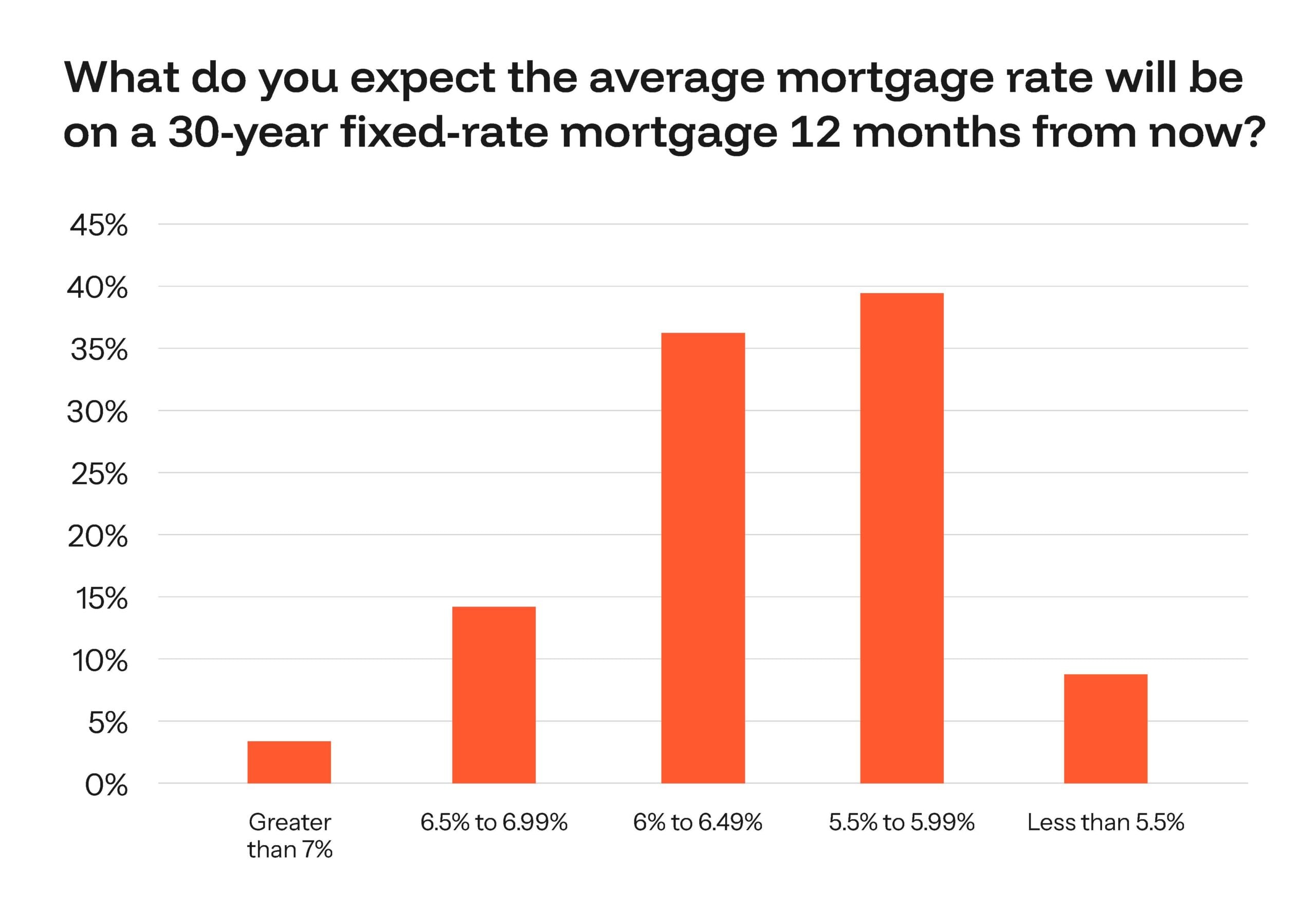
BiggerPockets members have read the market correctly, which is why most plan to build their portfolios rather than sit on the sidelines.
The Home Price Growth Map: What’s Up With Atlanta and Indianapolis?
The BiggerPockets home price growth map for 2026 shows a noticeable divergence between markets expected to grow and those where momentum has stalled or reversed. Georgia and Indianapolis, real estate stars in past years, have fallen into the latter category, dropping over 5%. It has had a marked effect on how both residents and buyers feel about their local markets.
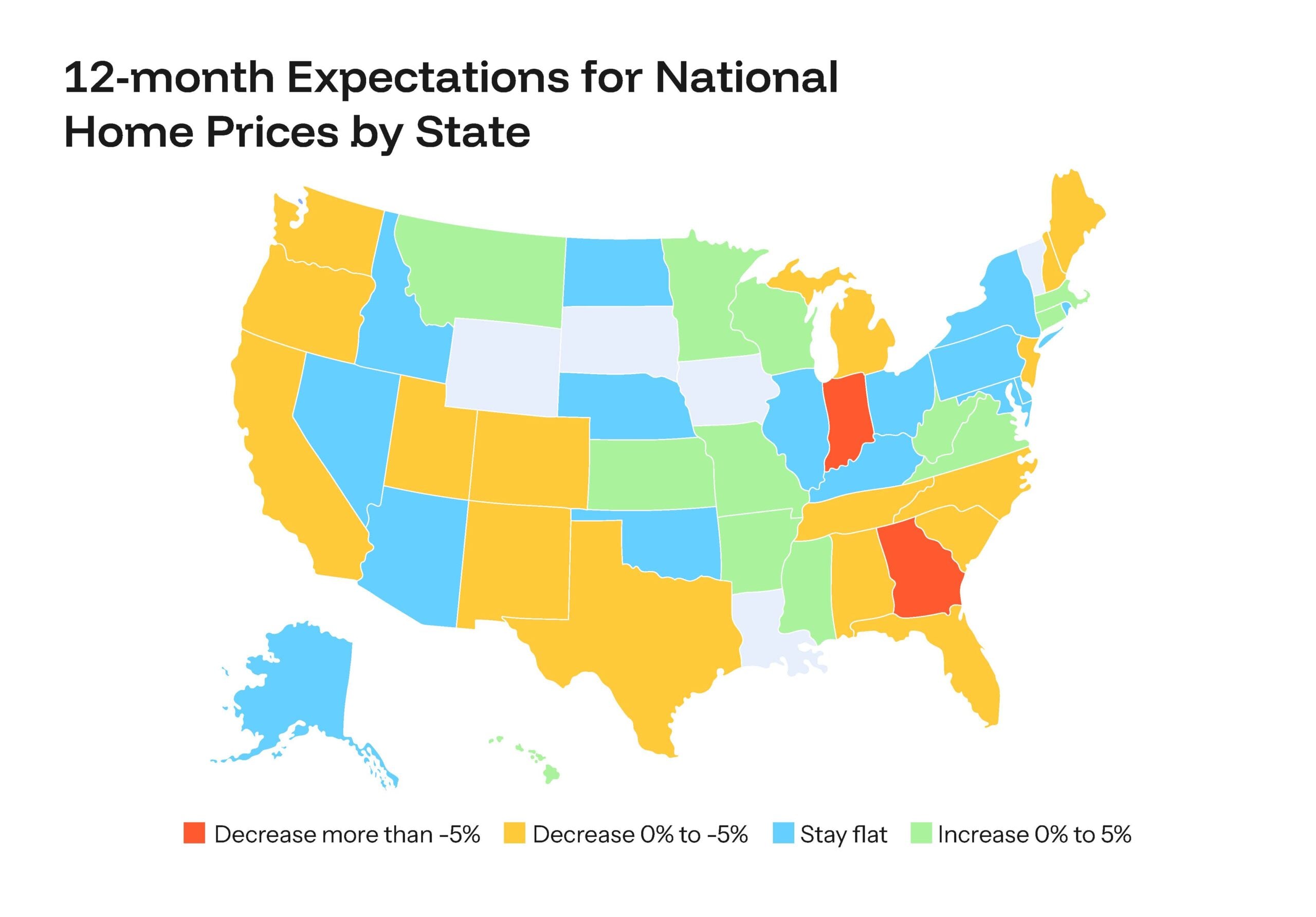
“Hotlanta” is no longer hot
Atlanta was once an investment rock star with an exuberant post-pandemic market. The forecast drop in sales is due to softening rents, higher insurance and property tax costs, and a smaller pool of buyers able to afford peak-era prices. Investors in the Atlanta area could do well to wait for the market to bottom out before making a move, and cash flow at current prices could be hard to come by.
Indianapolis: A confounding picture
BiggerPockets data estimates over a 5% drop in house prices in Indiana. However, certain markets will experience greater declines than others. HousingWire reported at the end of 2025 that Indianapolis saw sellers cut prices on 56% of homes amid rising inventory and low absorption rates.
Despite the seemingly alarming numbers for both Atlanta and Indianapolis, the metros are a long way from crash territory. Instead, they are transitioning away from the frenzied price increases of 2020 to 2022 toward a more mundane market with slower appreciation.
In both cases, waiting for the market cycle to run its course before jumping in seems prudent for investors.
Growth Markets: Slow, Steady, and Still Affordable
If you’re trying to formulate an investment strategy, the Northeast, Midwest, and pockets of the interior South could prove a happy hunting ground, according to the BiggerPockets home price?growth map. States expected to appreciate by more than 5% are:
- Arkansas
- Connecticut
- Kansas
- Massachusetts
- Minnesota
- Mississippi
- Missouri
- Montana
- Virginia
- West Virginia
- Wisconsin
Chilly Northeast Markets Present Long-Term Opportunities
Realtor.com shares a similar opinion with New York markets such as Rochester and Syracuse, which are close to Rhode Island and Connecticut, where Hartford, Connecticut, another fast-appreciating metro, is located, where appreciation is expected to be in the double digits. These markets are highlighted by their relatively low housing prices, population growth, and limited housing supply.
Many of these cities are benefiting from big investments from the tech sector. For careful buyers, these markets can offer the holy trinity of affordability, steady growth, and cash flow—so long as you buy right.
Certainly, compared to many metros, these cities offer a safer option. However, many sections of these cities have not yet “turned the corner,” with high crime still an issue, such as in Syracuse, which means buyers need to be wary of stepping into a tenant landmine.
Why Ownership Rates Affect Rental Inventory
National data shows that as of Q2 2025, 65% of U.S. homeowners own their homes, while 35% rent, with variations by state. States in the Midwest and South often have higher homeownership rates, and thus tighter sales inventories—factors that support price stability and moderate appreciation.
Lower prices here equate to greater affordability for both homeowners and renters. This contrasts with some of the South and West markets, where rapid construction and price escalation have resulted in flat or declining rents, stagnant or negative price growth, and affordability issues for many would-be buyers.
In short, it’s hard to invest in many Sunbelt markets compared to more stable markets elsewhere, where the numbers still work, demand is diversified, and forecasts indicate slower, durable appreciation.
Renters, Owners, and the Costs
Deciding where to invest has to be balanced with stats concerning rental demand. Just because a city is affordable and appreciating does not mean there will be a high demand for rental housing.
While the average homeownership numbers around the country is 65%, in states such as West Virginia, Maine, and Minnesota, ownership spikes to over 70%, according to DoorLoop, while pricey states such as California, New York, and Nevada see real percentages approaching 40%, far above the national average of 35%. In the more expensive states, it’s much harder to make cash flow numbers make sense.
Stable Single-Family Rental Markets
High ownership, lower-cost states and metros such as West Virginia, Delaware, Michigan, Maine, and Vermont tend to support stable single-family rentals because residents prize homeownership, according to visualcapitalist.com, but not everyone can buy initially.
These renters have a greater likelihood of eventually becoming buyers, but start out by renting a single-family home—the next best thing. As prices rise in single-family markets, the likelihood of renting for longer increases, but the risks of investing also rise due to greater leverage.
Final Thoughts
Placing BiggerPockets Pulse responses alongside national forecasts, a coherent investment strategy emerges for 2026. In the face of a spectacularly unspectacular housing market, BiggerPockets members are focusing on long-term rentals and portfolio building, rather than speculative appreciation or short-term rentals.
For depreciating markets such as Atlanta and Indianapolis, adjust underwriting accordingly and buy right, below recent comps, anticipating the markets to bottom out or wait for them to do so. In falling home price markets, sellers are desperate, creating opportunities for savvy buyers.
In home-price growth markets, investors cannot afford to let the same disciplined protocols slip. Identifying solid, gradually increasing—mid?single digits—rather than exuberantly increasing markets is the key to long-term growth. Coupled with this is the need for healthy sales activity, affordability, and income and employment ratios below 30% for both renters and homeowners.
Layering savvy investment strategies, such as forcing equity through rehab and holding long enough to benefit from gradual appreciation, on top of other metrics, will ensure the one thing BiggerPockets investors covet most: a dependable, long-term cash-flowing rental.